



Tech hub’s biggest station will make regional travel easier, but some Shenzhen residents worry it is too small relative to other rail hubs
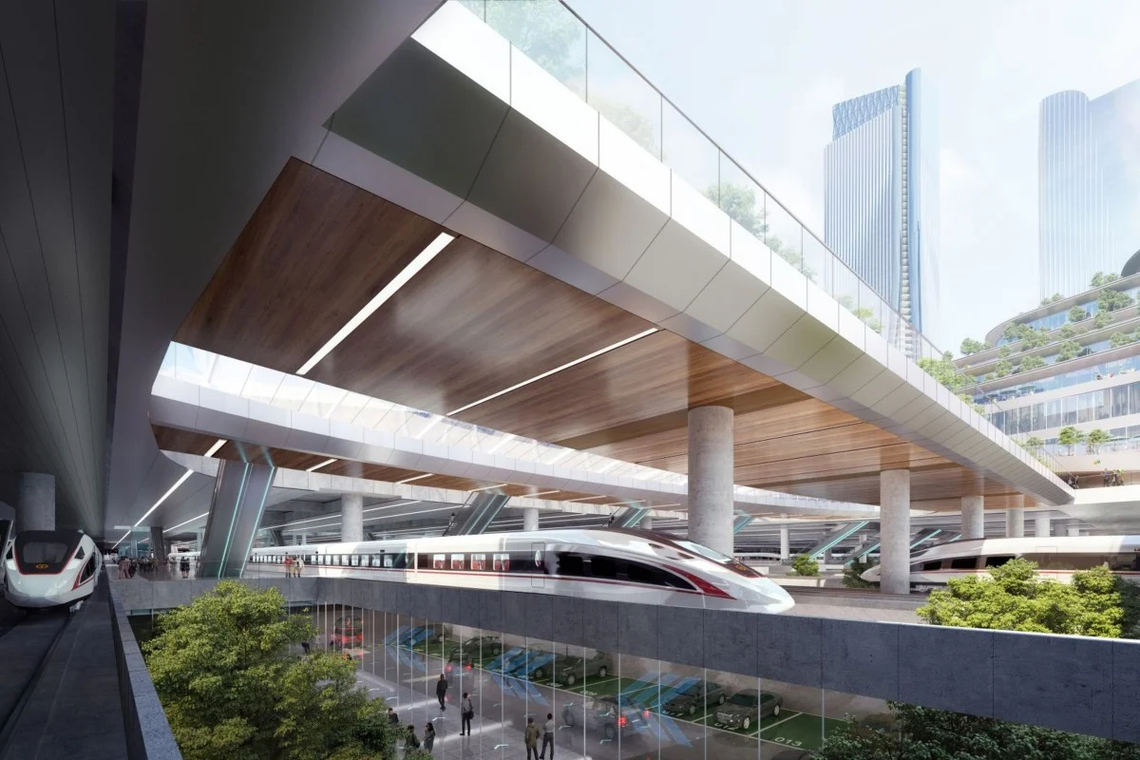
An artist’s rendering of Shenzhen Xili Station. Photo: Handout
As Shenzhen prepares to break ground on a new high-speed railway station later this month, some residents of the southern Chinese tech hub worry it may not be big enough.
The 13.2 billion yuan (US$1.9 billion) Xili Station in the city’s downtown Nanshan district, set to be inaugurated in 2028, is not another of the mammoth projects that were common during the heyday of China’s infrastructure buildout.
But the futuristic integrated transport hub will help make trips to other cities in the Greater Bay Area development zone – and beyond – easier and more seamless.
As policymakers reflect on fundamental shifts in China’s all-out construction model, observers have praised Shenzhen’s “prudent” planning and emphasised the station’s significance for regional integration benefiting Hong Kong.
Though the planned station – with 25 tracks and 13 platforms – would be the city’s largest after opening, it is smaller than similar rail hubs built in other major cities in the recent past.
For instance, the 15-year-old Xian North Station in northwestern China’s Shaanxi province has 34 tracks and 18 platforms, while Guangzhou South Station, which opened in 2010, has 28 tracks and 15 platforms, with space reserved for further expansion.
Xili’s relatively “conservative” size has prompted some Shenzhen residents, dismayed by overcrowding at the city’s existing stations, to complain about “shortsighted” planning.
Some took to social media platforms to urge authorities to reconsider the design and make it bigger.
“Shenzhen’s gross domestic product ranks third among all cities nationwide and it has a population close to 20 million. How come its newest station cannot even rank among the nation’s 10 largest?” one post read.
But Guo Hai, director of the Institute of Public Policy at South China University of Technology in Guangzhou, said Xili aimed to strike a delicate balance.
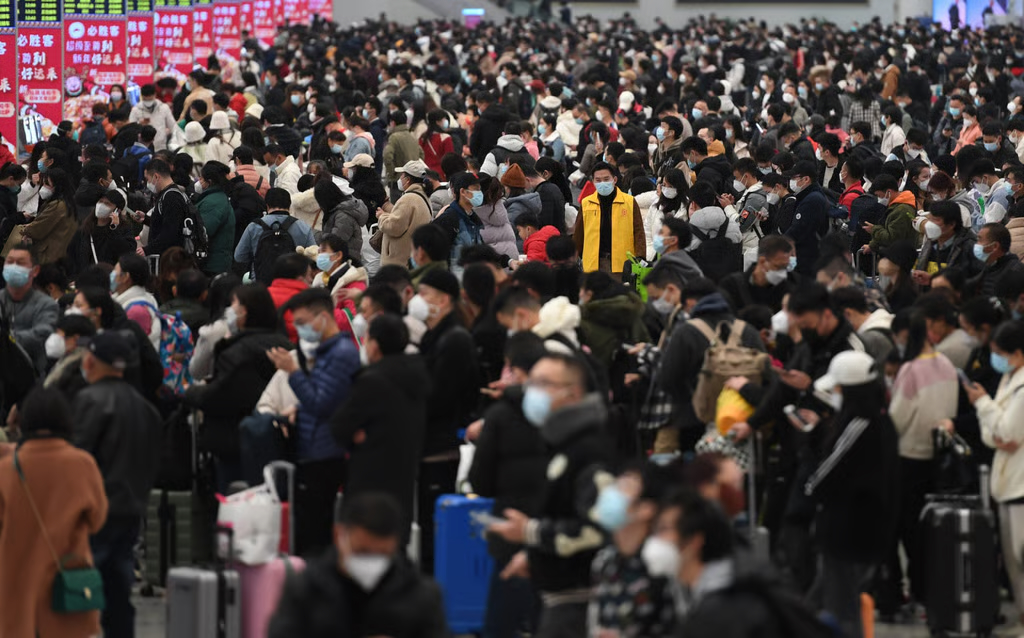
Passengers prepare to board trains at Shenzhen North Station during the Spring Festival travel rush in January 2023. Photo: Xinhua
“China’s railway and station construction boom has already peaked and, going forward, we need projects that are better planned,” Guo said. “It’s about ensuring money is wisely and prudently spent [on a moderately sized station] while alleviating pressure from other transport facilities in Shenzhen and serving cross-border passengers from Hong Kong.”
The Xili station will straddle four high-speed railways linking Shenzhen to neighbouring cities, as well as two intercity lines. It will also be served by four Shenzhen Metro lines. Upon its completion, rail travel time between Shenzhen and Guangzhou, Guangdong’s provincial capital, will be slashed to less than an hour, according to Shenzhen media reports. Hongkongers will be able to use Xili as a transfer point to more northbound trains.
Guo added the “smaller but smart” Xili design could serve as a model for future Chinese railway stations, especially those aimed at fostering regional integration in key megalopolises like the bay area, which aims to coalesce the advantages and efforts of Hong Kong, Macau and nine cities in Guangdong – including Guangzhou and Shenzhen – to achieve synergies in economic development, especially in technology and finance.
China has crammed a century’s worth of Western urbanisation and railway construction into around two decades.
The world’s second-largest economy operates the world’s most extensive high-speed rail network – spanning more than 50,000km (31,000 miles) – with bullet trains travelling at speeds of 250km/h (155mph) or higher. By 2024, the country already boasted 70 per cent of the world’s high-speed track, and sprawling stations were also built across the country – though some remain underused or almost deserted.
Hefty construction investment, maintenance costs and weak ticketing revenue on many lines have strained the finances of the national railway operator and the coffers of local governments.
“Nowadays, China Railway and local authorities face tighter fiscal constraints, compounded by difficult, costly land acquisition [for new stations and lines] and adjustments to project planning, scrutiny and approval,” said Song Shaomin, a professor at Beijing University of Civil Engineering and Architecture.
“There is a fundamental shift in China’s post-pandemic urbanisation and infrastructure development. There is also revised ridership … railway planning is transitioning from a focus on size towards a more pragmatic, demand-driven model.”
Song added that demand shifting to aviation could also be a factor in China’s changing attitude towards larger stations.
“As new railway stations shrink in size, the demand for small and medium-sized airports may increase across central and western China in the future, and low-altitude transport may also emerge,” he said.
Frank Chen in Shanghai
The report was published on the official website of the South China Morning Post on June 5, 2026, with the original headline 'Smaller but smart' Shenzhen railway station to redraw China’s infrastructure blueprint. Author: Frank Chen