



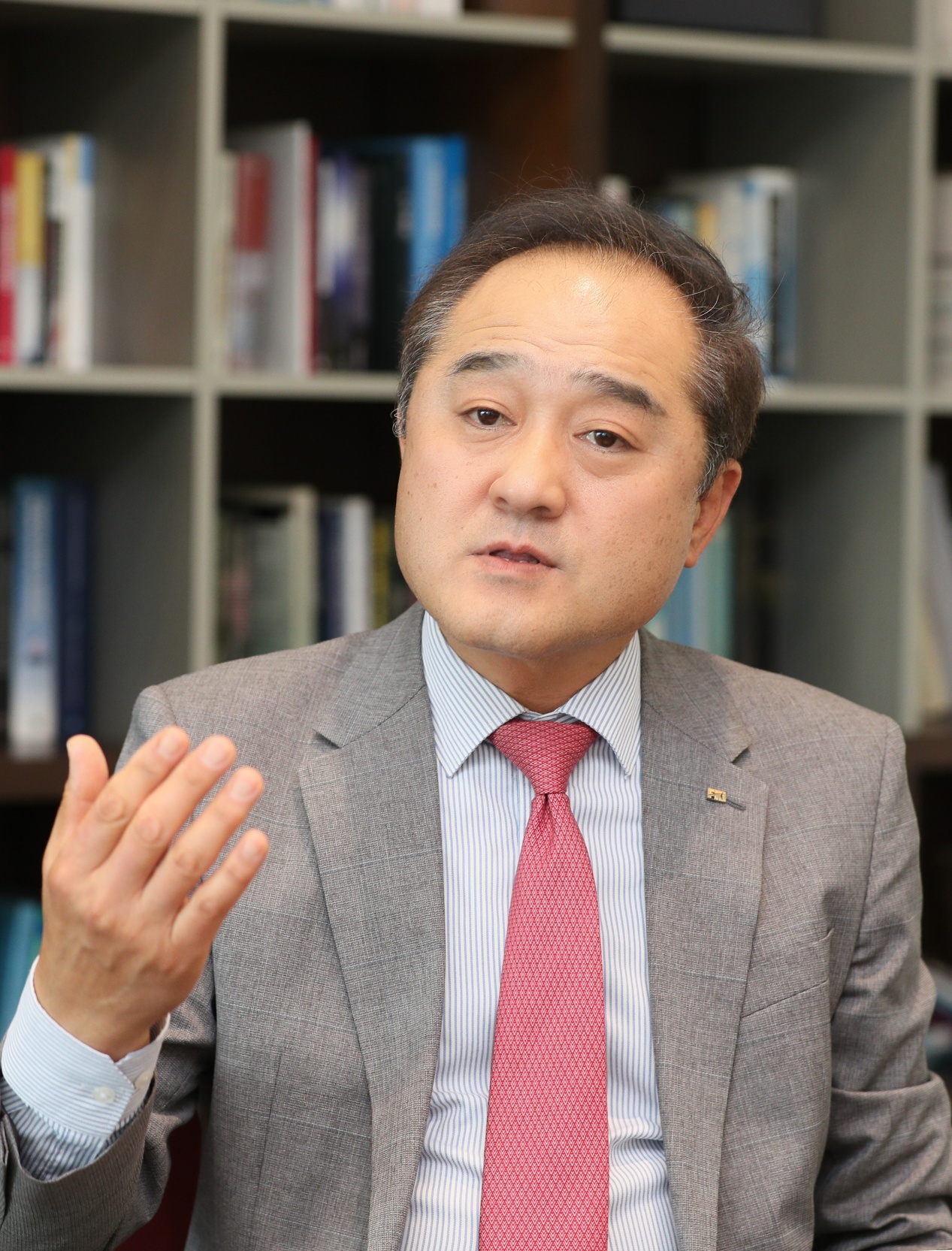
CHUL CHUNG
President, Korea Economic Research Institute (KERI)
Chief Research Officer, Federation of Korean Industries (FKI)
Co-Chair, Korea National Committee for Pacific Economic Cooperation (KOPEC) President, Korean Association of Trade and Industry Studies
Speaker Bio:
Dr. Chul Chung is President of the Korea Economic Research Institute (KERI) and Chief Research Officer (CRO) of the Federation of Korean Industries (FKI). He also serves as CoChair of the Korea National Committee for Pacific Economic Cooperation (KOPEC), and President of the Korean Association of Trade and Industry Studies.
Prior to his current roles, Dr. Chung was Senior Vice President at the Korea Institute for International Economic Policy (KIEP). Before returning to Korea, he taught international economics at the Georgia Institute of Technology (Georgia Tech) in the United States. He has also served as an adjunct professor at the Graduate School of International Studies, Seoul National University, and at the KDI School of Public Policy and Management. He previously served as Editor-in-Chief of the East Asian Economic Review and Journal of International Trade and Industry Studies.
In government services, Dr. Chung was Senior Trade Advisor to the Minister of Trade, Industry, and Energy (MOTIE), and a member of several ministerial advisory committees. From 2009 to 2012, while on leave from KIEP, he worked in Washington, D.C. as Chief Economist at the Korea International Trade Association (KITA), where he contributed to the ratification of the Korea-US Free Trade Agreement (KORUS FTA).
Dr. Chung has written extensively on international trade, regional economic cooperation, and APEC-related issues. He holds a Ph.D. in economics from the University of Michigan, Ann Arbor.
Presentation Title:
Inclusive Innovation in an Era of Fragmentation: A New Agenda for APEC
Abstract:
The global economy is undergoing a structural transition from efficiency-driven globalization toward resilience- and security-oriented industrial competition. At the same time, artificial intelligence (AI) is reshaping not only productivity but also the architecture of economic growth. While AI offers enormous opportunities, its benefits are increasingly concentrated among leading economies and frontier firms, creating widening gaps in technological capabilities, innovation capacity, and economic performance. Meanwhile, geopolitical fragmentation and diverging regulatory frameworks threaten to undermine cross-border collaboration and reduce the scalability of innovation.
I suggest that the appropriate response is not less openness, but governed openness—an approach that preserves open innovation while strengthening institutions, trust, and cooperation. Building on the APEC AI Initiative, I propose a practical agenda centered on three priorities: developing interoperable digital infrastructure through open standards and trusted data collaboration; narrowing AI capability gaps through capacity building, public-private partnerships, and knowledge sharing; and fostering a competitive and inclusive innovation ecosystem supported by open-source platforms and balanced governance.
I also highlights the role of PECC as a bridge between AI-leading and AI-aspiring economies by providing evidence-based policy recommendations, facilitating cross-sector dialogue, and supporting APEC's efforts to advance inclusive AI governance. Sustaining Asia-Pacific prosperity in the AI era will depend not only on technological leadership, but also on building an open, trusted, and inclusive regional innovation ecosystem.